|
|
|
We were recently asked to do an interview for IDG. The article is now published as the top story on TechWorld Australia. There is a summary article, written by Rohan Pearce. We congratulate Rohan on his new position as the editor of TechWorld. He was kind enough to publish the full interview, as well. The articles are even discussed on Slashdot.
|
|
|
The Webster web browser in Syllable 0.6.6 fails to remember cookies, because it tries to store them in the location for the old ABrowse browser that it succeeded. The development build of Syllable Desktop has a newer version that fixes this, which is also on the new Syllable 0.6.6 live CD. You need it for example to make web sites remember your log-in status. We have now made this Webster version available separately in our additional downloads, so it is easier to install on Syllable 0.6.6.
|
|
|
Anthony has made and published a new version of Transferrer, our FTP client application. He has made a number of fixes to the functionality and the appearance, and has integrated work from contributors. The application is not done yet, but it is becoming usable for your downloading pleasure, and your uploads if you are so inclined.
Remember, Transferrer is our community project, so you can help creating it, and we supply extra facilities to support you.
|
|
|
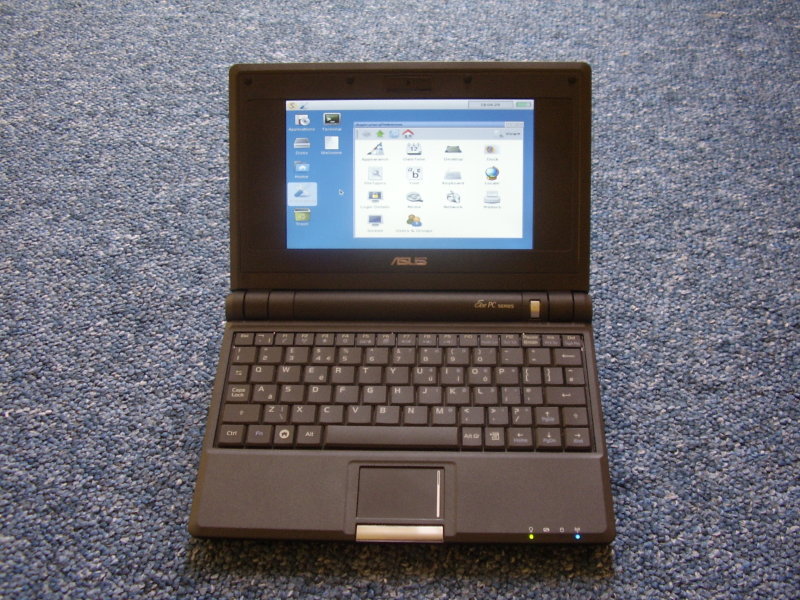
We have released a live CD for Syllable Desktop 0.6.6. It has been a long time since the last live CD, so we skipped Syllable 0.6.5. The creator of the original live CD left the project, without releasing the build scripts. Further it turned out that a needed patch to Syllable wasn't available, either, so we had to create a whole new live CD, including a modified kernel.
The goal of this live CD is to make it usable for many more real tasks. This is the first Syllable live CD that can run from a USB CD player. Compared to the old live CD's, it also has specific support for emulators and some netbooks. The default screen resolution is more comfortable and virtual desktops are used to provide other resolutions at a keypress. The desktop is arranged with quick access to functions that are useful when running the live CD. The old ABrowse is succeeded by the Webster browser. CUPS, SANE, CDRTools, SimpleBurn, 7-Zip, OpenSSH, Transmission and NetCat are now included. More drivers are also included, such as BFS and the native AtheOS network file system. There are also several improvements over Syllable 0.6.6. For the first time in a Syllable release, it ships with the REBOL 3 programming language, including the cURL binding that was written by us. The Boron programming language is also included and the Webster browser is a fixed version. The boot menu is based on the enhanced one in the current Syllable development build and has extensive troubleshooting options.
Be sure to read the Welcome document on the desktop. It was written especially for this live CD to introduce its (new) features.
|
|
|
"Bogomips" has been working hard to bring us many goodies. He has opened a website for French Syllable users with instructions in French, and another website for many SDL applications that he is porting to Syllable. He is providing instructions for compiling them, and also software packages ready to install. There are over fifty packages already, in multiple categories such as games, music and graphics software, so you may want to have a look. :-) And finally, he made a nice video of the Power Manga game.
We have wished for many years that people would take up the many SDL programs that can be ported to Syllable, so we commend him for this effort.
|
|
|
User "Bogomips" on the forum has found that our SDL subsystem on Syllable Desktop doesn't support PNG images yet. We tracked the problem to the SDL-Image component and found TIFF image support missing, as well. We have published a fixed resource package for SDL-Image that you need to port modern SDL programs or to run programs ported by others. Installing this will not remove the SDL-Image in the system, but will override it. Although JPEG (and GIF) images already worked, you need to install the new LibJPEG package, too. This is now a shared library, and used by SDL-Image.
Since SDL-Image is missing from the current Syllable Desktop development build, you can also use these packages to fix that.
In the process, we published new packages for LibPNG, GIFLib and LibTIFF, that you can use to develop or port software. Finally, we made a package for the Pig example game.
|
|
|
The website for the ReBorCon 2011 that Bas is organising is now available. ReBorCon is a new, international conference for the REBOL family of programming languages, including the current REBOL 2 line, the REBOL 3 in development, and the open source Boron language. The programme includes several topics that are of interest for Syllable.
|
|
|
During the SylCon Summer conference 2010 we filmed the presentations given. It took a while to process them, but thanks to skûtsje shipper Paul Fortuijn (who took the time of processing all the movies) now they are finally available on YouTube. If you want to view the movies in Ogg video format, use this website: TinyOgg.com.
Topics covered include the Syllable Server release 0.4, the new graphical development version of Syllable Server, advancements in REBOL 3, improvements in our CMS and how we will open up our communication channels. The movies are Dutch spoken. If you want to help making translations and sub-titles of these videos please contact Bas de Lange on the email address mentioned here.
|
|
|
We wish everyone a good Syllable year! Last year we promised to create some breakthroughs, and we did. After making the REBOL 3 and Boron programming languages available on both Syllable Desktop and Syllable Server, we started working on their closer integration with the system. We created the first REBOL extension on Syllable, and will soon announce the first binding with a programming library. We made the REBOL 3 collaboration system and the CMS for the Syllable web sites run on Desktop. The CMS became more capable and fifteen times faster, so that it is now much easier for us to maintain the sites. We made a new Syllable Server release, and created a graphical version of it with the ROX desktop, that we are using internally and that has enabled us to move away from non-Syllable Linux distributions (extending our hardware's life span in the process).
Most of these accomplishments are "under the hood". We demonstrated them on the Syllable Conferences and on Software Freedom Day, but they are not easily available yet. So the main goal for this year is to continue with these developments and to make them better available to the public.
|
|
|
The CMS that builds our websites was used on Syllable Server so far, but now it has been ported to Syllable Desktop. This was done by porting it to REBOL 3. The screenshot shows Desktop building its own website in static batch mode and synchronising it with Amazon S3.
This screenshot shows Webster previewing the built site as local files. Building the websites on Syllable Server is around 35% faster with REBOL 3 than with REBOL 2. A few longstanding problems in our Russian website and documentation were fixed because REBOL 3 now understands Unicode.
|
|
|
The latest version of the REBOL 3 open host kit, alpha 110, enables Syllable Desktop for the first time to run the REBOL 3 client/server RebDev collaboration application for chat and development files sharing. It already worked in the Linux version for Syllable Server. The client is not an application that was ported and needs to be installed, but is a small REBOL script that is downloaded in its newest version every time the program is started - much like a web page. It runs unmodified, currently on Syllable Desktop, Syllable Server, Linux, FreeBSD, OpenBSD, Amiga OS (PPC), OS X (Intel & PPC) and Windows.
The source code of the REBOL 3 open host environment is now hosted in a public Git version management repository. To compile REBOL 3 on Syllable Desktop, you need to have the following software packs installed:
- Development files pack for your exact Syllable version
- Developer's Delight
- Network Necessities
To compile REBOL 3 and start the RebDev application, enter the following commands:
build update
build log
build get REBOL-Core--current
build patch REBOL-Core--current
build REBOL-Core--current
build install REBOL-Core--current
r3
chat
new-user
|
|
|
Bas is organising a conference for the REBOL family of programming languages, including the current REBOL 2 line, the REBOL 3 in development, and the open source Boron language. The conference will be held on Saturday February 26 in the Netherlands, in the same venue as the Syllable conferences. Many of the demonstrations will be done on Syllable Server and Syllable Desktop.
We will set up a website for the conference later, but we want to get the word out as soon as possible to gauge interest. If we get international visitors, we have the option to scale up the event to multiple days, including the Friday, to make the journey worth their while. So if you are contemplating coming, or even better if you are interested to give a presentation or demonstration or workshop, please contact Bas de Lange.
Update:
The website is now on-line.
|
|
|
Kaj has overhauled the Boron demonstration he presented at Software Freedom Day for publication on the web. Boron is the programming language that is the successor to the ORCA language that we use in Syllable. If you want to try it, Boron is already available in Syllable Server 0.4 and the development build of Syllable Desktop.
The presentation starts with an introduction to Boron. It then demonstrates how to build a small dynamic website that serves up the presentation itself. So there is a simple website content management system in there and a simple presentation program, in about fourty lines of Boron programming. Both the program and the presentation are available for download.
The demonstration is running on Syllable Server and the Cheyenne web server, just like the original talk at Software Freedom Day. It could also run on Syllable Desktop by using one of the web servers available for Desktop.
|
|
|
Ed informs us on our forum that the current September issue of PCLinuxOS Magazine is starting a series of articles about Syllable Desktop. They're written by Darrel Johnston and available on-line. The magazine is free under a Creative Commons license and can be downloaded in PDF format or viewed on the web. The first article introduces Syllable Desktop and shows the installation process with a very nice series of screenshots.
|
|
|
Syllable
is a volunteer project that creates a family of easy to use, free
software operating systems. You can use them separately, or you can use
them together to form network platforms. Read our full introduction and go to the Syllable Desktop and
Syllable Server
sites for more information, news and software downloads. Syllable Desktop is
an original, modern operating system design, in the tradition of the
Amiga and BeOS, but built using many parts from the GNU
project and Linux. It is designed and optimised for your desktop PC,
making it exceptionally fast and responsive and easy to use. It is
under development, so it is interesting and even exciting
to try out, but you
have to decide for yourself whether it fits your needs already.
Syllable Desktop runs on industry-standard Personal Computers with a
minimum of a Pentium compatible processor and 32 MB of
memory. It can make a new computer extremely fast and an old computer
usable again. More
specificationsSyllable
Desktop site Syllable Server
is a small and efficient Linux operating system. It uses the Linux
kernel and is compatible with Linux software, but is otherwise built to
be as similar as possible to Syllable Desktop, using mostly the same
parts. It is optimised for server computers, yet inherits a
lot of efficiency and speed from the Syllable Desktop design. The
current version only has a text mode console interface suitable for
server use and elementary support for running some graphical programs
(it is shown here running on Syllable Desktop under emulation).
Nonetheless, the clean Syllable design and straightforward
documentation make it easy to use. The graphical user
interface from
Syllable Desktop will be added in later versions to enhance ease of use
further. Due to its Linux base, Syllable Server is a stable
and usable system. It runs
on industry-standard Personal Computers with a minimum of a 486
processor and 16 MB of memory. It can make a new
computer very fast and efficient and an old computer usable again. More specificationsSyllable Server site
|